Everyone is talking about Cal AI. The question nobody is asking is: why did it win?
Not "why is AI in food tracking interesting" — that's obvious in hindsight. The real question is: what specific combination of signals made Cal AI inevitable? And more importantly, how do you find the next one before it becomes a TikTok trend?
We pulled Cal AI's live data directly from AppScout and ran it through our scoring engine. Here's what the numbers say.
The numbers, unfiltered
Pulled live from AppScout · April 2026
Cal AI – Calorie Tracker
Viral Development LLC · Health & Fitness · iOS
HIGH CONFIDENCE
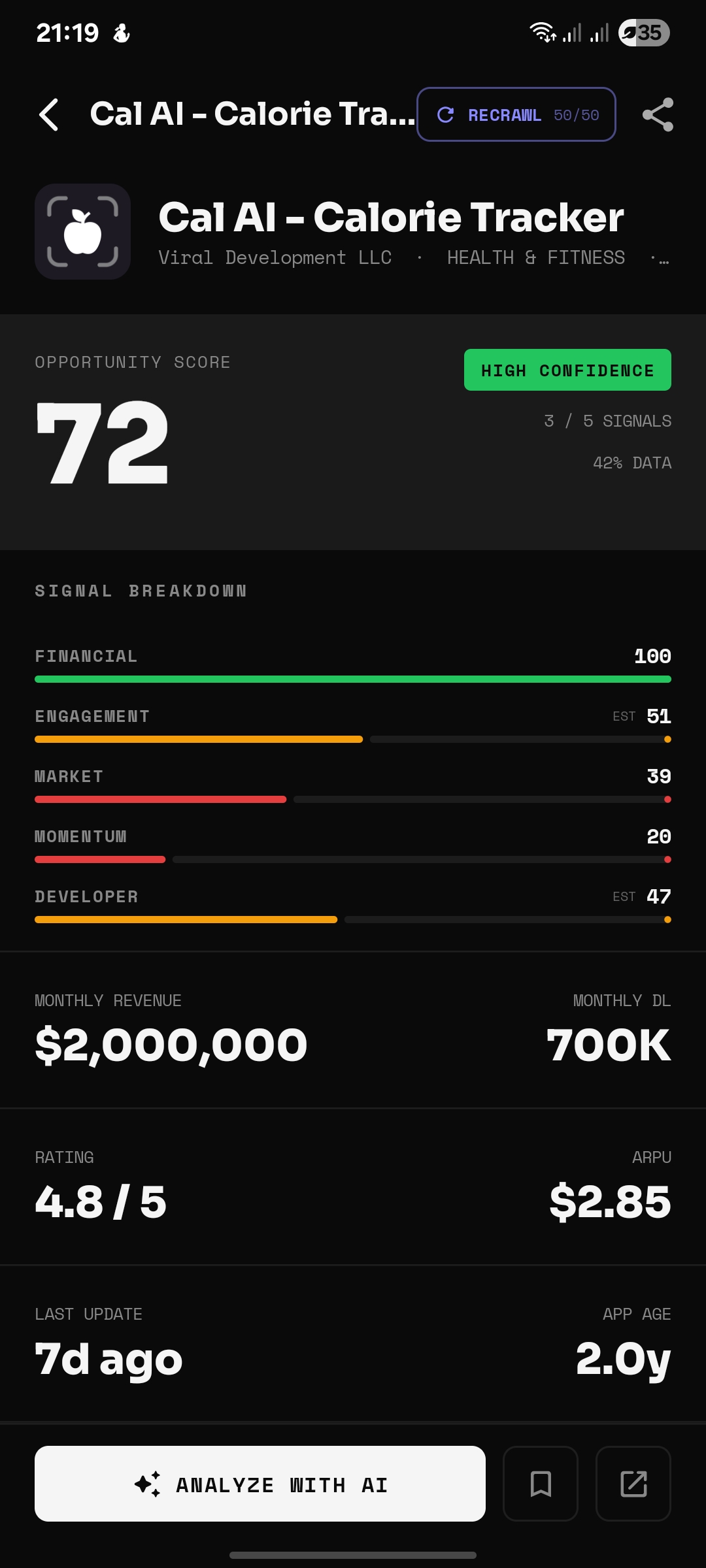
Score + Signal Breakdown
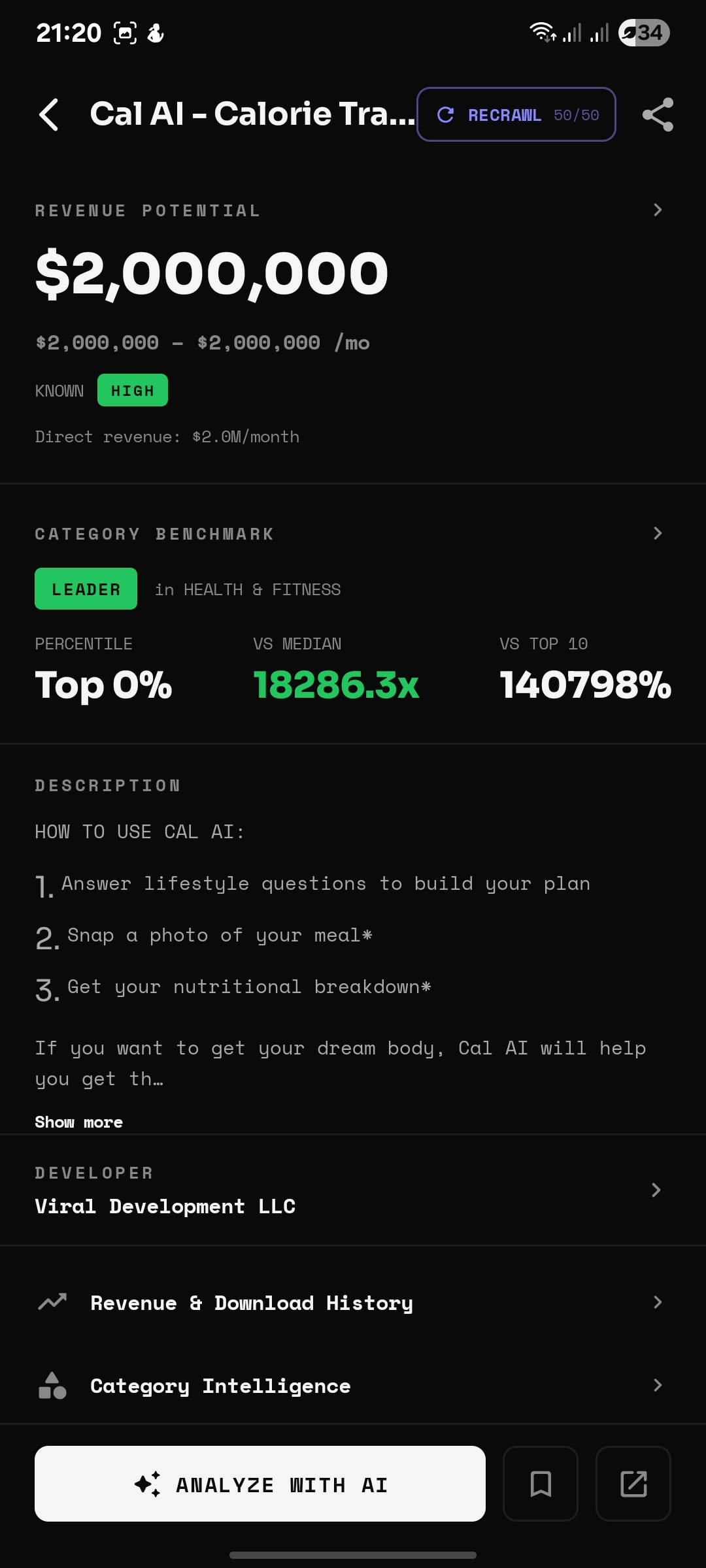
Revenue & Category Benchmark
Two things stand out immediately. First, the Financial signal is a perfect 100 out of 100 — that is the maximum AppScout's scoring engine can assign. Revenue is not estimated here; it is directly known from store data. $2.0M/month, confirmed.
Second: Cal AI sits in the Top 0% of Health & Fitness. Not top 1%. Top 0%. Its revenue is 18,286x the category median and 140,698% above the top-10 average. This is not just a good app. It is a category-defining outlier.
AppScout Signal Breakdown — Cal AI:
The scoring engine processes five signals. Cal AI maxes out on Financial (100) but scores only 20 on Momentum — meaning growth has plateaued. This is normal for a 2-year-old app. It also scores 39 on Market (reflecting the brutal competition in Health & Fitness). The opportunity is not in copying Cal AI. It's in reading what these signals tell you about where to find the next one.
SIGNAL BREAKDOWN
Why Health & Fitness is a terrible category — and where the gold is
Here's the brutal truth: Health & Fitness is one of the hardest categories to win in. AppScout's Category Intelligence rates it CHALLENGING with a composite indie score of just 30 out of 100.
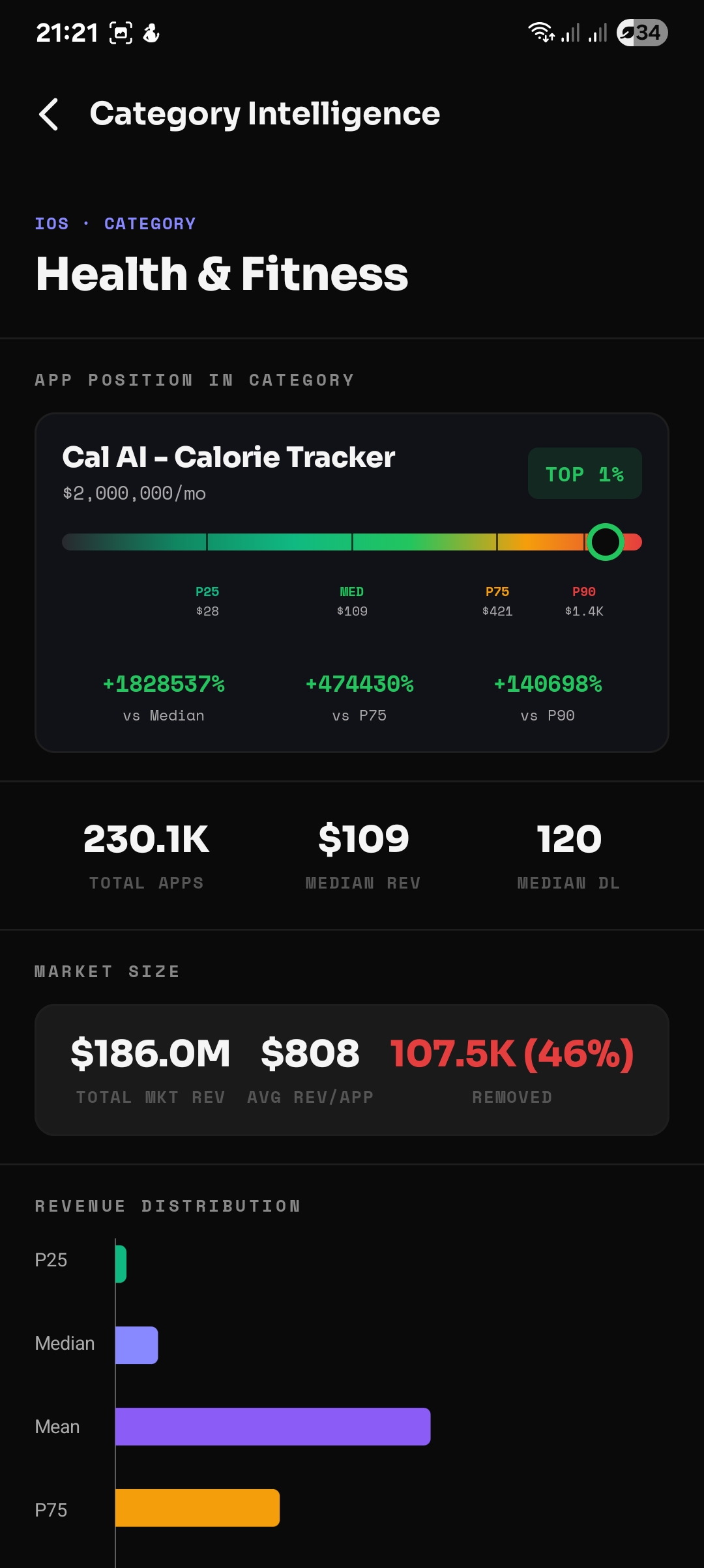
Category Overview
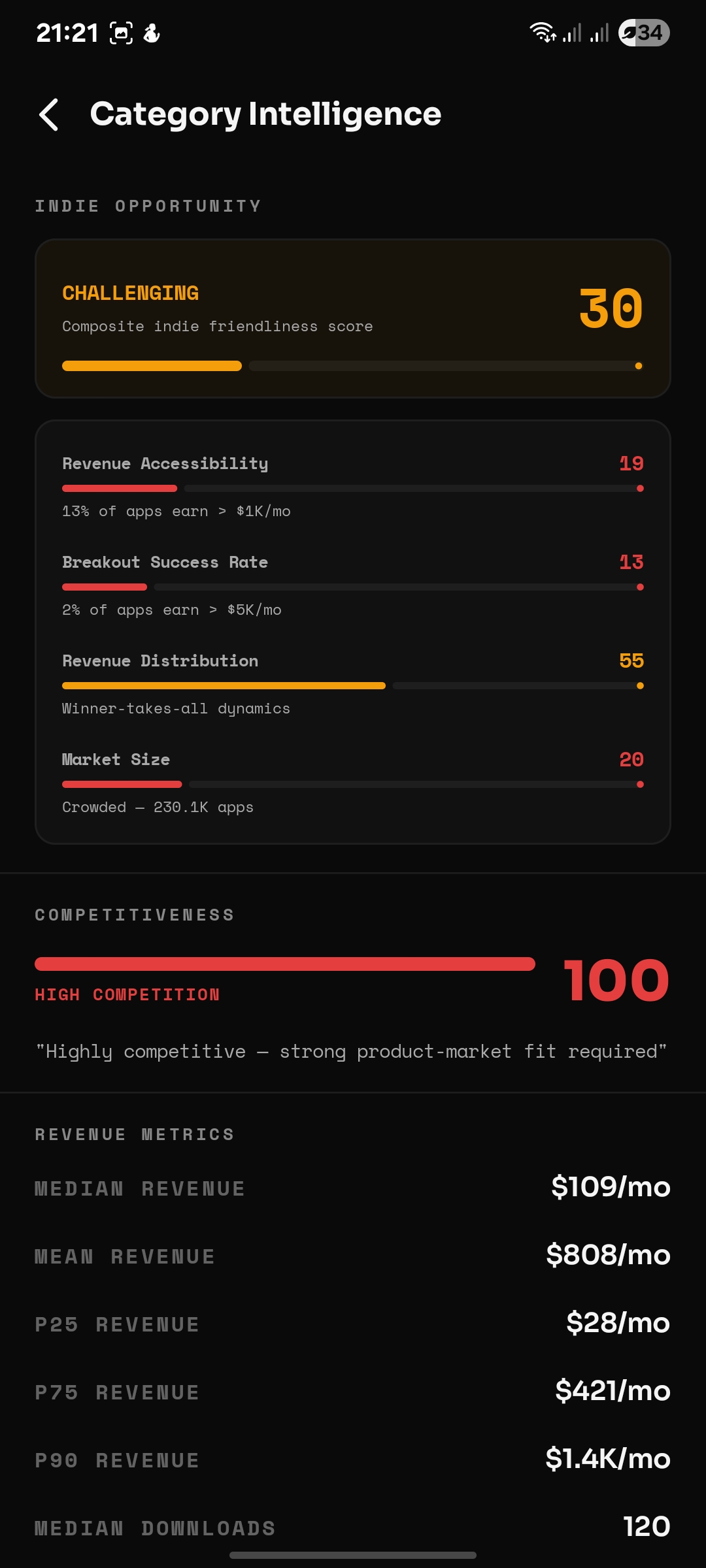
Indie Opportunity Score
The numbers are stark. There are 230,100 Health & Fitness apps on iOS. The median app earns $109 per month. The mean is $808 — but the mean is dragged up by outliers like Cal AI. The true picture:
Most apps never break $1K
Revenue Accessibility: 19/100
Breakout Success Rate: 13/100
107,500 apps already pulled
Competitiveness scores a maximum 100 out of 100. AppScout's note: "Highly competitive — strong product-market fit required." Revenue distribution shows winner-takes-all dynamics (score 55): the top 1% capture a disproportionate share of the $186M total market.
This is actually good news for builders who understand the pattern. Winner-takes-all means the gap between #1 and #10 is enormous. It means once you find the right formula, there's almost no ceiling. Cal AI proved this. The question is: what is the formula?
The Cal AI Formula, decoded
After running Cal AI's data through AppScout and cross-referencing it with the category intelligence, a clear pattern emerges. Cal AI didn't win because it had AI. It won because it stacked four specific advantages:
Everyone eats. Not three times a week — three times a day, every day. Cal AI's retention is baked into biology. Compare this to a meditation app (optional) or a workout tracker (aspirational). Food is mandatory.
The core interaction is one tap: point camera, get answer. Traditional calorie trackers required you to search a database, weigh food, and manually log every ingredient. Cal AI collapsed that to a single photo. The AI isn't the product — the elimination of friction is.
The output of Cal AI — a nutritional breakdown of your meal — is native TikTok and Instagram content. Users don't just use the app; they post their results. This created a viral loop that no paid UA budget could replicate at its scale. The product markets itself.
Health & Fitness had 230,000 apps and a median revenue of $109/month. That's not a sign of a dead market — it's a sign that 229,999 apps were doing it wrong. The demand was already there (AppScout confirms the $186M/year category). Cal AI gave it a better exit.
An ARPU of $2.85 with 700,000 monthly downloads is deceptively efficient. It means users are paying without friction — no hard paywalls, no aggressive upsells. The product converts because the value is felt immediately, before the paywall even appears.
How to find the next Cal AI with AppScout
The formula is clear. Now the question is: where does the next one live? We applied a tighter filter in AppScout to surface only the genuinely relevant data: recent apps (released within the last year), high quality (★4.5+), and already in the $50K–$100K/month range. Not legacy incumbents — new entrants that are already breaking through.
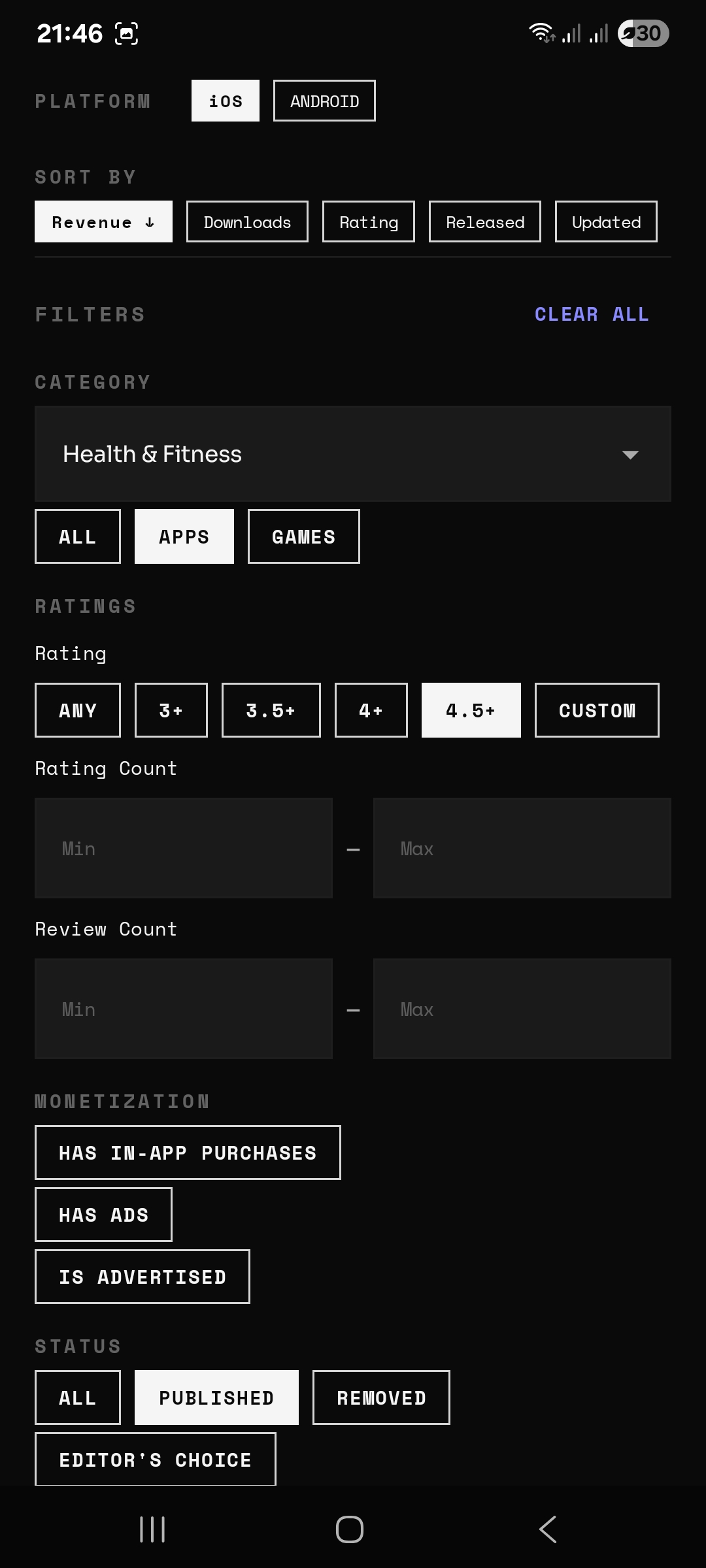
Filter: Category + Rating 4.5+
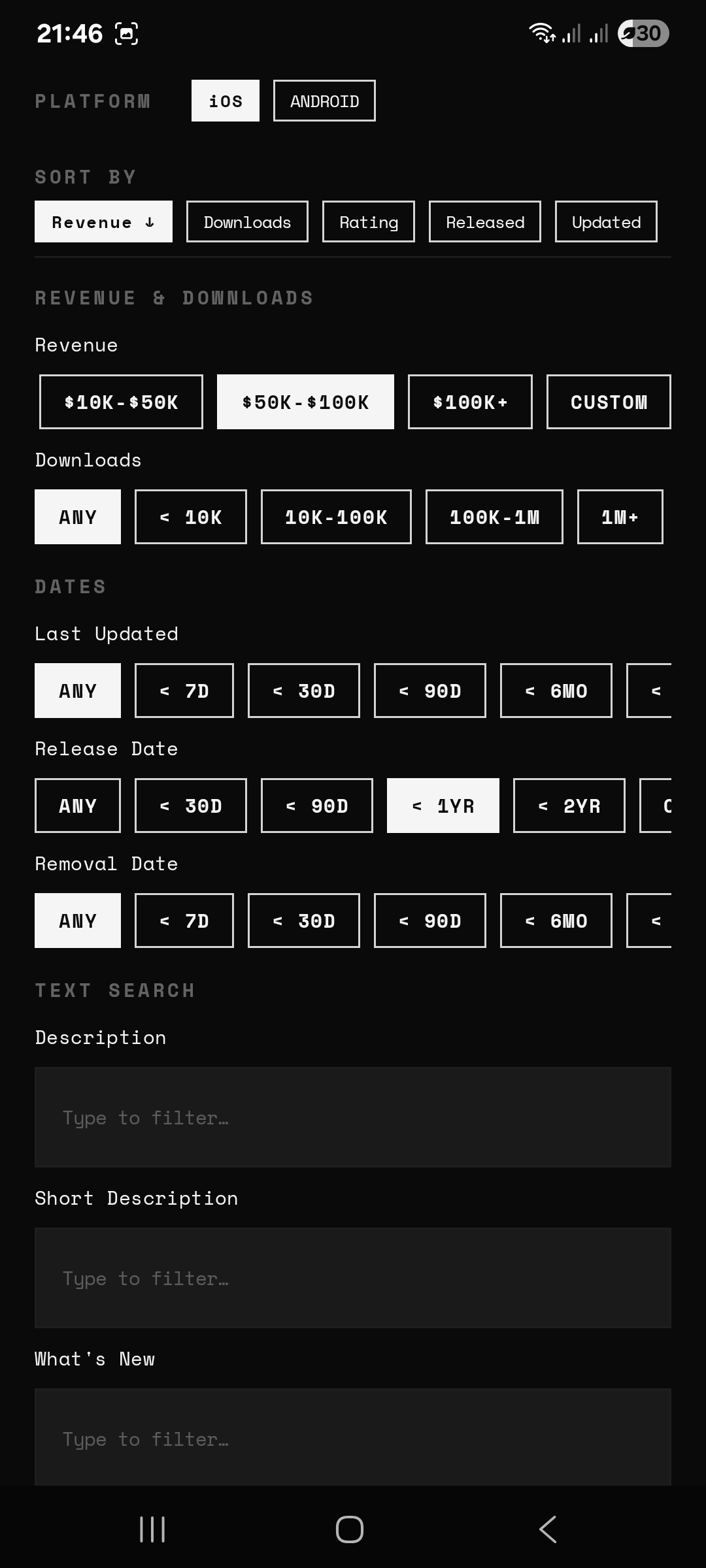
Filter: Revenue $50K–$100K + Released < 1yr
The full filter combo: iOS · Health & Fitness · Apps · Rating 4.5+ · Revenue $50K–$100K · Released < 1 year · Sort by Revenue. The rating floor and recency constraint cut the result set from 50 to 15 — every single one of those 15 is a recent app that launched, found product-market fit fast, and is already earning serious money. These are the ones worth reverse-engineering.
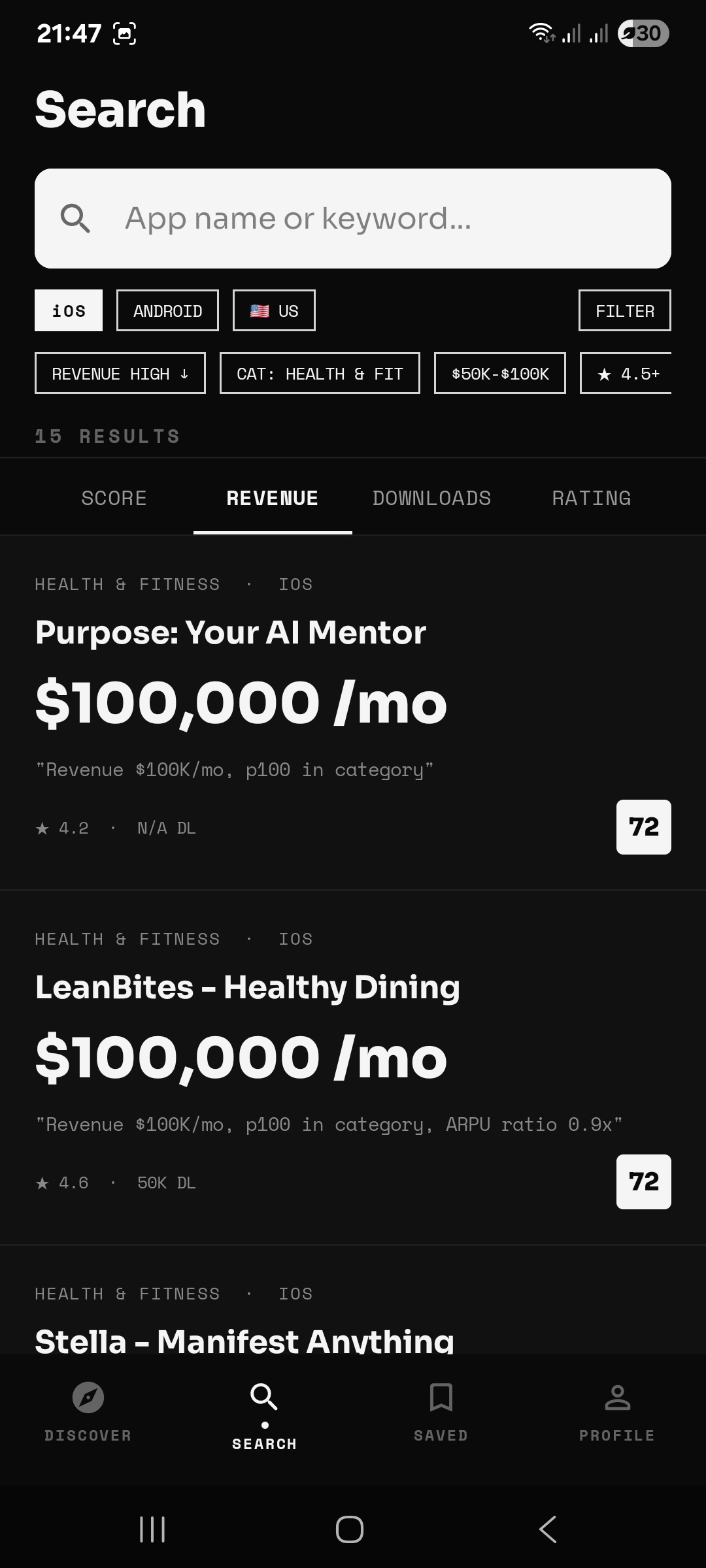
Health & Fitness · iOS · ★4.5+ · $50K–$100K · Released <1yr · Revenue sort · 15 results
The top two results tell an immediate story:
Purpose: Your AI Mentor
$100,000 /mo
"Revenue $100K/mo, p100 in category"
LeanBites – Healthy Dining
$100,000 /mo
"Revenue $100K/mo, p100 in category, ARPU ratio 0.9x"
Both patterns are instructive. Purpose: Your AI Mentor is an AI-native health app — the Cal AI formula applied to life coaching and goal-setting. LeanBites – Healthy Dining is food-intelligence, adjacent to calorie tracking but targeting restaurant discovery for health-conscious users. Both hit $100K/month as recent entrants. Neither requires 700K downloads to do it.
What 15 results instead of 50 tells you: Adding the rating floor (4.5+) and the recency window (<1yr) doesn't shrink opportunity — it focuses it. You're not looking at every app that ever succeeded in Health & Fitness. You're looking at apps that launched recently, users love them, and they're earning $50K–$100K/month. That's your actual competitive landscape. Study those 15 before you write a single line of code.
The 4-step playbook for building the next one
You're not going to clone Cal AI. But you can apply the same formula to a different daily behavior, a different demographic, or a different friction point that AI can eliminate. Here's how to find it systematically:
- Start with behavior, not technology. Cal AI's core is not "AI calorie tracking." It's "what did I just eat?" — a question people have been asking for decades. Find the question people ask daily that currently requires too many steps to answer. Then ask: can AI collapse it to one tap?
- Filter for winner-takes-all categories with challenged indie scores. Counterintuitively, the brutal categories are the best targets. A 30/100 indie score with winner-takes-all dynamics means the top app can 18,000x the median. Find categories with this pattern — Health, Finance, Education — and look for the daily behavior nobody has properly solved with AI yet.
- Study the $50K–$100K ceiling in your target category. Use AppScout's revenue filter to find the apps that have proven the market but haven't broken through. What's their ARPU ratio? What are users complaining about in reviews? The ceiling apps tell you exactly what the market wants next.
- Build for shareable output, not just useful output. Cal AI's output (a nutritional breakdown of your meal) became content. Before you design your app, ask: is the output of this app something a user would screenshot and post? If yes, you have a built-in distribution channel that no paid UA can match.
Find the next Cal AI in your category.
AppScout gives you live revenue data, category intelligence, and the exact filter combos to find breakout opportunities before they trend. Free to start.